Understanding Residential Carpet Installation
When it comes to enhancing the aesthetics and comfort of your home, Residential carpet installation is a popular and effective choice. This process not only contributes to the visual appeal of your living spaces but also offers warmth and sound insulation. Understanding the fundamentals of residential carpet installation can help homeowners make informed decisions about their flooring options, streamline the purchasing process, and select the ideal carpet for their individual needs.
What is Residential Carpet Installation?
Residential carpet installation refers to the process through which carpets are laid in homes to provide a finished flooring solution. This involves several stages, including selecting the right type of carpet, preparing the subfloor, and installing the carpet using appropriate methods and tools. Professional installers are trained to ensure that the carpet is fitted correctly, enhancing both its durability and appearance.
Benefits of Carpet in Your Home
Choosing carpet for your home comes with numerous benefits:
- Comfort: Carpet offers a soft, cushioned surface that provides comfort underfoot, making it an excellent choice for bedrooms and living areas.
- Insulation: Carpet acts as an insulating layer, helping to retain warmth in your home during winter and reducing energy bills.
- Sound Absorption: The fiber structure of carpets absorbs sound, reducing noise levels and enhancing privacy within rooms.
- Variety: With countless colors, textures, and patterns available, carpets can complement any décor style.
- Safety: Carpets can provide a non-slip surface, which is especially important in homes with children or elderly residents.
Types of Carpets Available for Installation
Homeowners have a variety of options when it comes to carpet types. Here are some of the most popular categories:
- Plush Carpet: Known for its soft texture, plush carpets create an inviting atmosphere and are ideal for bedrooms or cozy living areas.
- Saxony Carpet: This type features longer fibers, giving it a sophisticated and luxurious look but may show footprints or vacuum marks.
- Berber Carpet: Made from looped fibers, Berber carpets are durable and stain-resistant, making them suitable for high-traffic areas.
- Frieze Carpet: With tightly twisted fibers, frieze offers a more casual look and is excellent for disguising dirt and footprints.
- Commercial Carpet Tiles: Although primarily designed for commercial use, these tiles offer versatility and durability, making them increasingly popular in residential installations.
Preparing Your Home for Carpet Installation
Assessing Your Space and Needs
Before proceeding with carpet installation, it is crucial to evaluate your space. Consider the following factors:
- Room usage: High-traffic areas may require more durable carpet options.
- Style preferences: Do you prefer a modern, traditional, or eclectic look?
- Allergies: Opt for hypoallergenic materials if you or your family members are sensitive to dust and allergens.
Choosing the Right Carpet for Your Lifestyle
Your lifestyle plays a significant role in selecting the appropriate carpet. For families with children or pets, a stain-resistant option will help maintain the carpet’s appearance over time. Conversely, if you’re opting for a home office or a less frequented space, the luxury of a plush carpet may be more appropriate.
Measuring Your Space Accurately
Accurate measurements of the space are essential for minimizing waste and ensuring a perfect fit.
- Measure the length and width of each room.
- Multiply the length by the width to determine the area in square feet.
- Add at least 10% to account for waste and errors.
The Carpet Installation Process Explained
Steps to Prepare for Professional Installation
Prior to installation day, you should undertake several preparatory steps:
- Clear the room of furniture and any obstacles.
- Ensure the subfloor is clean, dry, and smooth.
- Address any repairs needed on the subfloor, such as filling in gaps or replacing damaged sections.
What to Expect on Installation Day
On installation day, a few key activities will take place:
- Initial inspection of the space by the installers.
- Installation of carpet padding, which provides comfort and prolongs the carpet’s life.
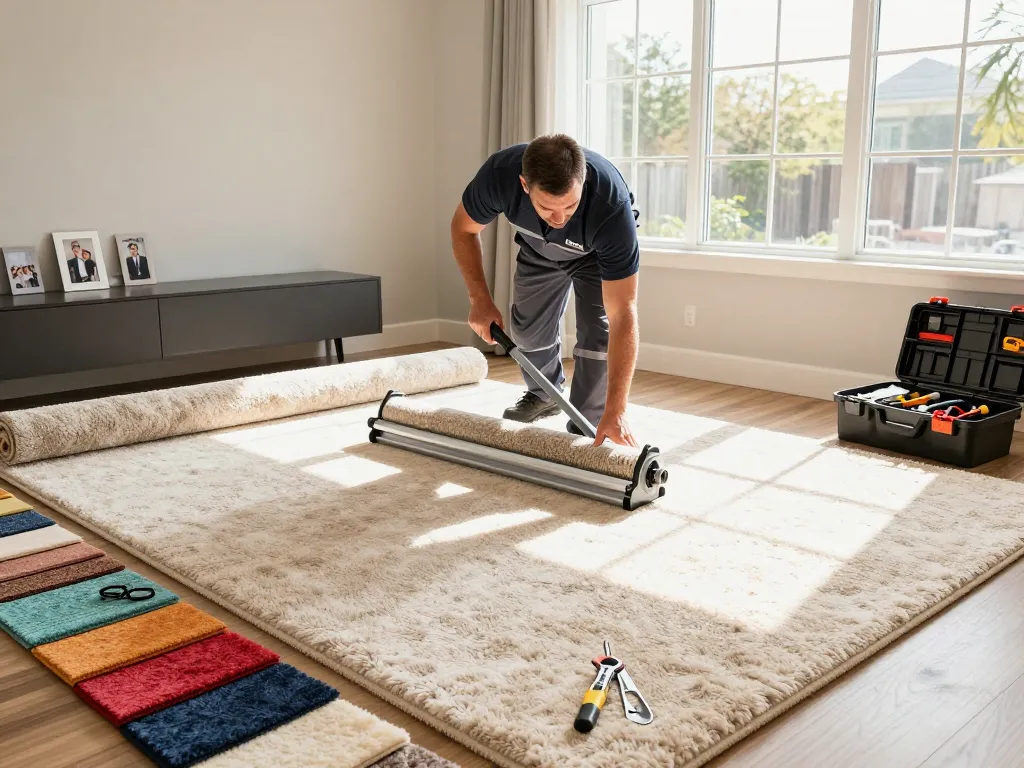
- Layout of the carpet and cutting it to fit the room dimensions.
- Installation of the carpet using appropriate techniques, including stretching and securing it in place.
Common Installation Techniques and Tools Used
Professional installers typically use specific tools and techniques to ensure durability and aesthetics, including:
- Carpet Stretchers: These tools help stretch the carpet for a snug fit.
- Seam Rollers: Used to press seams together to create invisible joins.
- Power Stretchers: Aid in achieving the proper tension across large areas.
- Utility Knife: For cutting carpet and trimming excess material.
Post-Installation Care and Maintenance Tips
How to Properly Maintain Your New Carpet
To keep your carpet looking fresh and new, implement a regular cleaning and maintenance routine. This includes:
- Vacuuming at least once a week to remove dust and dirt.
- Using a carpet cleaner for spills and stains as soon as they happen.
- Scheduling professional deep cleaning every 12-18 months.
Common Mistakes to Avoid After Installation
After installation, avoid these common pitfalls:
- Neglecting to use mats or rugs in high-traffic areas.
- Allowing spills to sit for extended periods.
- Failing to follow manufacturer cleaning and maintenance guidelines.
Long-term Care: Extending the Life of Your Carpet
Maintaining your carpet’s appearance involves proactive measures:
- Rotate furniture regularly to avoid uneven wear.
- Trim loose threads carefully without pulling them.
- Store your vacuum cleaner at the appropriate height to prevent damaging the carpet fibers.
Future Trends in Residential Carpet Installation
Eco-Friendly Carpeting Options for 2026
As sustainability becomes increasingly important, eco-friendly carpeting options are gaining traction. Homeowners can consider:
- Carpets made from recycled materials, which reduce waste.
- Natural fiber carpets, such as wool or sisal, that are biodegradable.
Technological Innovations in Carpet Installation
Advancements in technology are influencing carpet installation processes. Innovations to watch for include:
- Smart carpets with integrated sensors that can monitor foot traffic and cleanliness.
- Advanced installation methods, such as adhesive-free carpets that improve indoor air quality.
Predictions for the Carpet Industry in the Coming Years
As consumer preferences shift, the carpet industry is expected to evolve in several ways:
- Increased demand for custom designs and personalizations.
- A focus on resilient flooring options that mimic the aesthetics of carpet.
How to Select the Best Installer for Your Needs?
Choosing the right professional for your carpet installation can significantly impact the quality of your investment. Consider the following:
- Look for certified professionals with positive customer reviews.
- Ensure they use high-quality materials and adhere to industry standards.
- Inquire about warranties and post-installation support.
What Should Homeowners Expect in Terms of Costs?
The costs involved in residential carpet installation can vary widely based on several factors:
- Type of carpet chosen.
- Size of the area to be covered.
- Additional services such as removal of old carpet or subfloor preparation.
Generally, homeowners can expect to pay between $1 to $3 per square foot for labor, not including the cost of materials.